You just lost your job. Or you are waiting for Obamacare open enrollment. Your child wakes up with a fever. What do you do?
An emergency room visit costs $2,500 on average. An urgent care center might cost $200. A virtual doctor visit? Between $40 and $75.
This is why you are looking at short term health insurance with virtual doctor visits.
1. The basic mechanism of short term plans.
Short term health insurance is not ACA compliant. It does not cover pre-existing conditions. It does not cover mental health treatment. It does not cover maternity care.
What it does cover is sudden and unexpected medical events. A broken leg. A bad case of the flu. An ear infection.
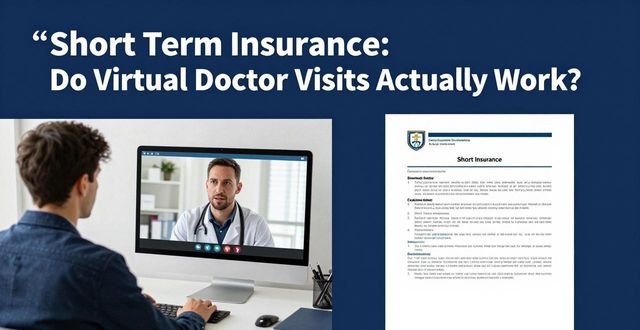
Virtual doctor visits are different. Most short term plans include telehealth as a separate benefit. You pay a small copay, usually $15 to $30 per visit. The insurance company contracts with a national telehealth provider like Teladoc or Amwell.
Here is where things get tricky.
2. How virtual visits work under short term policies.
You download an app. You enter your symptoms. A doctor calls you within 30 minutes. The doctor diagnoses your condition. They prescribe antibiotics if needed.
The entire process takes less than one hour.
But there is a catch. Virtual visits on short term plans only work for basic primary care issues. Sore throat. Sinus infection. Pink eye. Rash.
The doctor will not treat complex conditions. They will not refill maintenance medications for high blood pressure or diabetes. They will not order blood work or imaging.
What happens if you need a specialist? The virtual doctor will tell you to see a primary care physician. But your short term plan does not cover primary care visits. You pay 100 percent out of pocket for that specialist referral.
3. The financial reality you need to understand.
A typical short term plan costs $80 to $150 per month for a healthy 40-year-old. An ACA bronze plan costs $350 to $450 per month with subsidies.
You save $300 per month by choosing short term insurance. That is real money when you are between jobs.
But you must answer this question honestly. Can you afford a $5,000 hospital bill if something goes wrong?
Short term plans have high deductibles, usually $5,000 to $10,000. Virtual visits bypass the deductible. You pay the low copay regardless of whether you have met your deductible. This is the one advantage.
Here is the part most agents will not tell you.
4. The tax implication nobody discusses.
Short term health insurance premiums are not tax-deductible if you are self-employed. The IRS only allows self-employed health insurance deductions for plans that meet ACA standards. Short term plans do not qualify.
You also cannot use pre-tax dollars from an HSA to pay for short term premiums. HSA contributions require a qualified high-deductible health plan. Short term insurance is not qualified.
Virtual visit copays paid through a short term plan are not eligible for HSA reimbursement either. You pay those copays with after-tax money.
5. Two common mistakes you must avoid.
Mistake one: Assuming virtual visits replace real doctors.
A telehealth doctor cannot listen to your lungs with a stethoscope. They cannot feel your abdomen for tenderness. They cannot check your pupil response. If you have chest pain or difficulty breathing,they will tell you to call 911 immediately. The virtual visit fee is not refundable.
Mistake two: Buying the cheapest plan without checking the telehealth network.
Carrier A uses a telehealth service that only operates in certain time zones. Carrier B has 24/7 coverage but charges a $50 copay instead of $15. Carrier C excludes virtual visits entirely but markets the plan as including telehealth options.
You must read the fine print. Call the insurer and ask for the telehealth provider name. Then call that telehealth provider directly and confirm they cover your state.
6. How short term virtual visits compare to other options.
Traditional employer PPO plans include virtual visits for a $10 or $20 copay. These visits count toward your deductible. They also integrate with your electronic health record.
ACA marketplace plans include virtual visits as an essential health benefit. Many bronze plans offer free telehealth for basic issues. The catch is you must have an established primary care relationship first.
Direct primary care memberships cost $50 to $100 per month. You get unlimited virtual visits and same-day appointments. But this does not cover emergencies or hospitalizations. You still need real insurance.
Short term insurance with virtual visits sits in the middle. You get cheap catastrophic coverage plus convenience for minor issues. You accept the risk of no coverage for pre-existing conditions or preventive care.
7. Your specific action plan.
Step one. Write down your current health needs. Do you take daily medication? Do you have a chronic condition like asthma or depression? Short term insurance is not for you.
Step two. Calculate your minimum savings requirement. If you save $200 per month on premiums but expose yourself to a $10,000 deductible, you need 50 months without a claim to break even. That is a bad bet.
Step three. Call three short term carriers. Ask each one these exact questions. What is the telehealth copay? What conditions will the virtual doctor treat? What happens if the virtual doctor says I need an in-person visit? Does the plan cover that follow-up visit?
Step four. Verify the waiting period. Some short term plans have a 30-day waiting period before virtual visits activate. Others start on day one. This matters if you need antibiotics tomorrow.
Step five. Keep your old insurance as long as COBRA makes sense. COBRA is expensive, usually 102 percent of your former premium. But it covers everything. Compare the COBRA cost against a short term plan plus expected virtual visit usage.
The final question you must answer for yourself.
Are you buying short term insurance for peace of mind or for routine care?
If you need routine care, virtual visits on a short term plan will frustrate you. The doctor will send you to someone else. That someone else is not covered.
If you need protection against a car accident or a sudden pneumonia, short term insurance works. The virtual visits give you a low-cost way to filter minor problems without going to the emergency room.
Your cheapest option is not always your best option. Your best option is the one that matches your actual medical needs, not your hoped-for health.
Call me if you want to run the numbers on your specific situation. A fifteen-minute review of your medical history and your state regulations will tell you exactly whether short term insurance makes sense.